
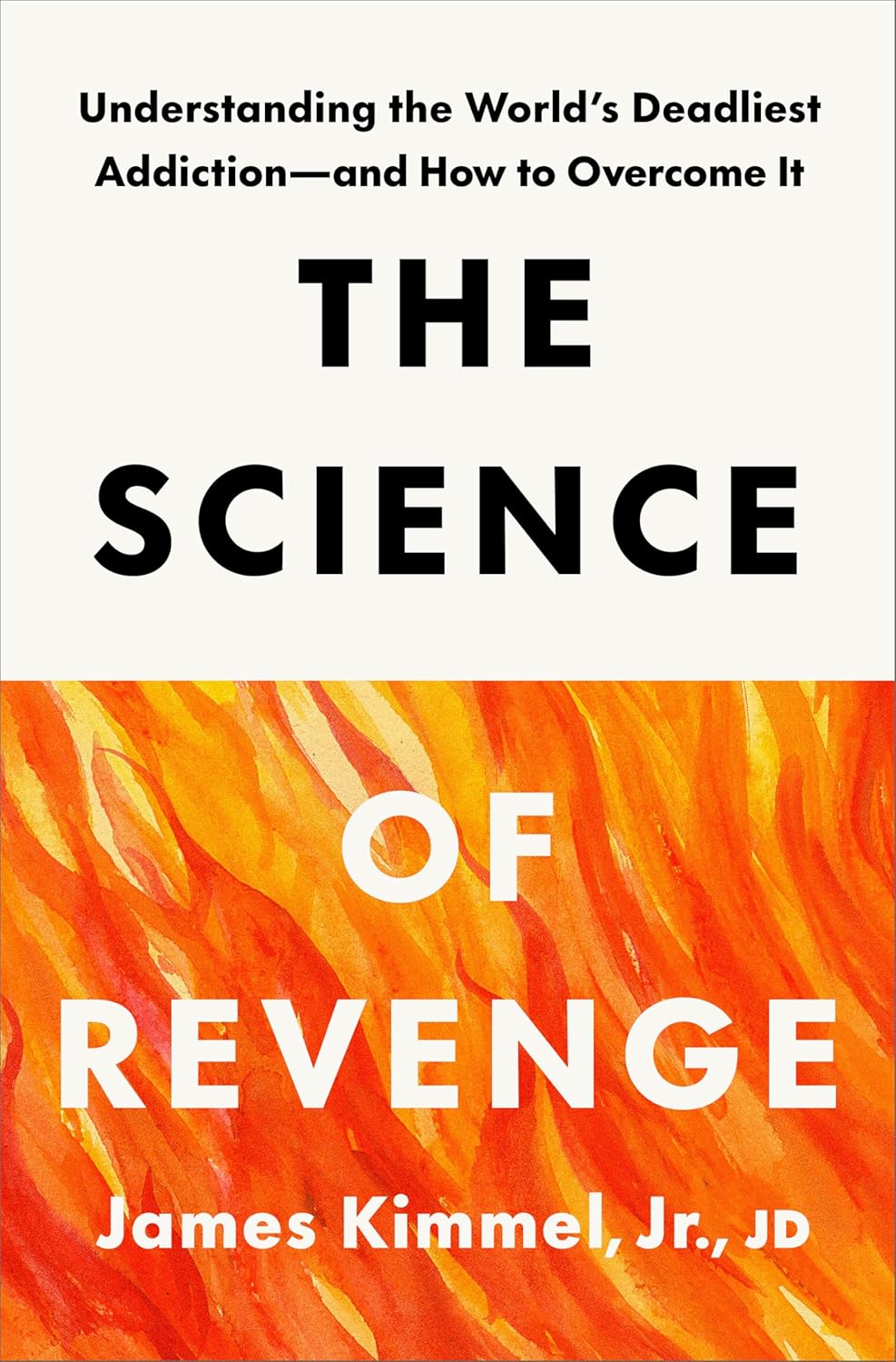
The Science of Revenge by James Kimmel, Jr.
When people hurt us, we immediately want to hurt them back. Vengefulness exists in children as young as toddler-age and has been observed in many non-human animal species.
Revenge has been widely written about since ancient times, sometimes described as one of life’s sweetest experiences, but other times described as tempting but ultimately hollow. Revenge is a common story structure in fiction, delivering both anticipation and payoff. Revenge is a universal theme in political rhetoric; among extremists, their ideology consists of little else.
At its core, revenge is payback for a grievance. In the ideal revenge fantasy, the target experiences pain, understands that the pain is the punishment for their past actions against the avenger, accepts the avenger’s version of justice, socially submits to the avenger, and does not harm the avenger again. In practice, revenge rarely unfolds so cleanly. A more common outcome is that the target develops a grievance over the revenge and desires a counter-revenge, potentially launching a self-perpetuating cycle.
Revenge is a form of self-administered justice. Revenge seekers put their target on trial inside their own minds, acting as the prosecutor, jury, judge, and warden. Since this process is so emotionally charged, the chosen punishment is often disproportionate relative to the harms committed. Since this process occurs silently inside one mind, revenge seekers can easily make unvetted leaps of logic that make sense to nobody but themselves. When the ideal target isn’t reachable, revenge seekers will often settle for a proxy of the ideal target instead. Mass shootings, hate crimes, terrorism, genocides, and other attacks directed against groups often target people who are obviously innocent, but in the attacker’s mind, everyone from the group is guilty.
Revenge originally evolved as a way to encourage group cooperation by deterring aggressive and exploitative behavior. Experiments and real-world data regularly show that people are willing to go to considerable lengths to punish defectors, even at a material cost to themselves. Since revenge-seeking is costly but sometimes necessary, evolution has made it pleasurable. The anticipation of revenge activates the dopamine-driven reward circuits of the brain. Like any substance or behavior that activates the brain’s pleasure pathways, revenge is vulnerable to being abused.
Revenge is the most common motive for aggression on all scales, from social shunning to war. Unprovoked aggression does not invoke the same pleasure as revenge; genuine sociopaths and sadists do exist, but they are rare. Likewise, revenge against enemies who have convincingly demonstrated repentance is not pleasurable either.
Revenge is not a complete coping strategy on its own because it does not solve the pain of the original grievance. At best, it only prevents a reoccurrence, and at worst, it invites even more pain and more grievances when the target strikes back. However, in the short term, revenge numbs pain and replaces it with pleasure, making it a potentially addictive and habitual behavior. Much like a compulsive gambler, a compulsive revenge seeker is no longer playing to win; they are motivated by the thrill of the hunt, the anticipation of pleasure, and a desire to quell a craving. In some people, revenge-seeking and punishment-seeking can escalate into a way of life, a pattern that governs most of their social interactions.
Revenge promises justice and closure, but rarely delivers it. When revenge does not bring about the desired outcomes, it is easy to blame the execution of the strategy rather than the strategy itself. Revenge addicts usually don’t recognize that they have a problem; they see themselves as good people administering justice in an unjust world.
Though all people experience revenge cravings on a regular basis, only a small fraction of all revenge cravings are ever acted upon. Revenge is usually neither practical nor productive, so a rational thought pattern will reach this conclusion. In most situations, the executive function circuits in the brain’s prefrontal cortex overrule the desires of the brain’s more primitive circuits, much as they do for other impulsive or intrusive thoughts. Much as with substance or behavioral addictions, revenge becomes a pathology when the cravings overpower all other considerations and people indulge these cravings regardless of the costs.
The best cure for revenge is to put the brain’s more rational circuits back in the driver’s seat. When people are made to spell out in detail the harms committed against them, the pains they have experienced, what they imagine the other side of the story looks like, and their desired remediation, they usually come out of the process feeling more at peace with the past, more sympathetic to their enemy, and more interested in a solution to the conflict that is constructive rather than merely punitive. When people handle their grievances in a structured process, they usually seek to bring about the best outcome for themselves rather than the worst outcome for their enemy. This thought pattern leads to a more forgiving posture.
Various religions and philosophical systems have been preaching the merits of forgiveness since ancient times. For someone consumed by revenge cravings, forgiveness feels like an intolerable free gift to the enemy. However, forgiveness has long been recognized as something you ultimately do for yourself out of your own self-interest. The choice to not seek revenge is a choice to end the cycle of conflict and to not incite future counter-revenges from the other side. The choice to not seek revenge is a choice to move on to constructive pursuits rather than ruminate forever on painful thoughts. The choice to not seek revenge is a choice to make peace with the past rather than try to change it.
Forgiveness is not a solution to everything, but far too often, human behavior goes too far in the other direction. Much as people are taught to practice nonviolence, a lot of suffering could be prevented if they sometimes made a choice to practice nonjustice too.